
In this article
- Key takeaways
- What football jersey GSM is best for match play?
- What does a lighter football jersey do for a player?
- What does a heavier football jersey do for a player?
- Is 160 GSM too thin for football?
- Does GSM matter more than the knit?
- What GSM suits a school or college football team?
- What GSM should goalkeepers and substitutes wear?
- How do you read GSM on a swatch without a scale?
- How do you order a football jersey in the right GSM?
- Fabrics in this guide

By Nishanth, founder of Jaypee Sportswear. Making custom team jerseys since 2012 at our own sublimation unit in Thanjavur. Updated 13 November 2026.
Football jersey GSM: 160 GSM is the match weight, with HEXA-B (₹699) and DOTTA-F (₹599) as light meshes, while 180 GSM PINDOT-N (₹399) is the tougher training and school option. GSM is grams per square metre, and our fabrics run from 140 to 180 GSM.
Key takeaways
- 160 GSM is the practical match weight: HEXA-B (₹699) and DOTTA-F (₹599) both score 3 out of 3.
- PINDOT-N at 180 GSM and ₹399 also scores 3 out of 3 but has no wicking, UV or anti-microbial finish.
- RIBRA-G is the lightest at 140 GSM yet scores 1 for football, so read the knit as well as the number.
- An 18 player squad costs ₹7,182 in PINDOT-N and ₹12,582 in HEXA-B, a gap of ₹5,400.
- Free mockup in 24 hours, delivery in 7 to 10 working days, minimum order 5 pieces.
For a football jersey, GSM is the weight of one square metre of fabric in grams, and our football shirts sit between 160 and 180 GSM. The two 160 GSM meshes, HEXA-B at ₹699 and DOTTA-F at ₹599, are the lightest we recommend for a match. The 180 GSM PINDOT-N at ₹399 is the heavier, tougher option.
GSM stands for grams per square metre, the same unit explained on the Wikipedia grammage page. A higher number means more cloth in the same area. Our whole range runs from 140 to 180 GSM, so this post only compares our own eight fabrics.
What football jersey GSM is best for match play?
For match play, 160 GSM is the practical choice: light enough to run in and strong enough to survive a tug on the shoulder. For training, school and rough grounds, 180 GSM lasts longer but feels warmer.
Here are all eight fabrics in order of weight, with our football fit score out of 3.
| Fabric | GSM | Knit | Price | Football fit |
|---|---|---|---|---|
| RIBRA-G | 140 | Rib ladder knit | ₹599 | 1 |
| HEXA-B | 160 | Honeycomb football mesh | ₹699 | 3 |
| DOTTA-F | 160 | Pinhole dot mesh | ₹599 | 3 |
| GRID-E | 170 | Grid micro knit | ₹499 | 1 |
| RHOMB-H | 175 | Micro rhombus knit | ₹599 | 1 |
| QUARTZ-A | 180 | Diamond knit | ₹699 | 2 |
| LINEA-S | 180 | Micro grid knit, no holes | ₹399 | 1 |
| PINDOT-N | 180 | Pinhole micro dot knit | ₹399 | 3 |
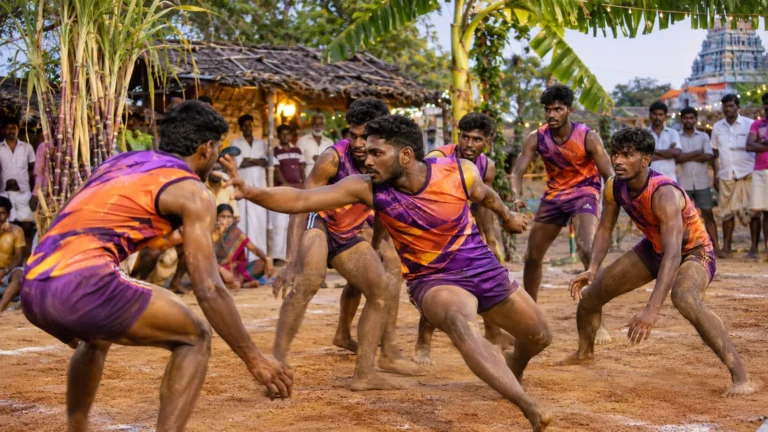
Look at the table for a second. The lightest fabric, RIBRA-G at 140 GSM, scores only 1 for football. GSM alone does not decide the fit, because RIBRA-G is a close-fitting rib knit built for kabaddi and warm-ups, with no open cells for air.
HEXA-B
3 / 3
DOTTA-F
3 / 3
PINDOT-N
3 / 3
QUARTZ-A
2 / 3
RIBRA-G
1 / 3
GRID-E
1 / 3
RHOMB-H
1 / 3
LINEA-S
1 / 3
What does a lighter football jersey do for a player?
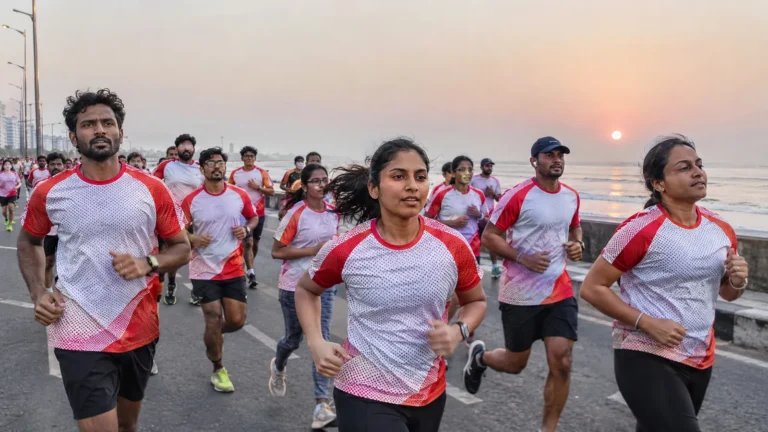
A lighter shirt carries less cloth, so it holds less sweat when soaked and dries sooner. For a winger or full back who sprints the length of the pitch many times a half, that matters in the second half, when the shirt starts to cling.
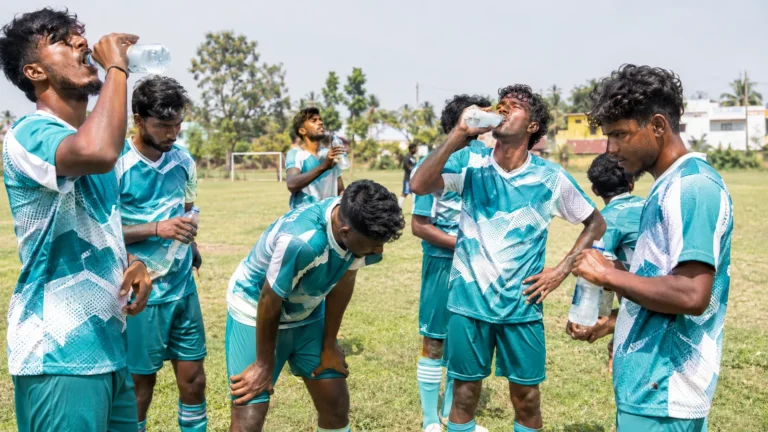
HEXA-B and DOTTA-F are both 160 GSM, but they feel different on the body because of their holes. HEXA-B has large honeycomb cells and moves the most air. DOTTA-F has small pinholes and a smoother face. Both carry wicking, UV and anti-microbial finishes, which a bare weight number does not tell you.
I have no wearer test to quote, so take this as physical reasoning: less cloth plus holes means faster drying.
What does a heavier football jersey do for a player?
A heavier shirt resists snagging and holds its shape through pulling, so it suits rough grounds, training and school football. It is warmer and slower to dry, which counts against it at midday.
PINDOT-N at 180 GSM is the example. Its pinhole micro dot knit lets some air through, and it is the cheapest fabric on our list that scores 3 out of 3 for football. It has no wicking, UV or anti-microbial finish, so a team playing at 2 pm should think about the lighter meshes. See the DOTTA-F vs PINDOT-N comparison for the 160 against 180 GSM trade in detail.
QUARTZ-A is also 180 GSM, with a closed diamond knit and the Elite finishes at ₹699. It scores 2 for football because the closed face gives no airflow.
Is 160 GSM too thin for football?
No. A 160 GSM mesh is the weight we recommend for match shirts. The knit structure holds it together, and sublimation does not add thickness or stiffness, because the colour is inside the fibre.
Where I would think twice is a team that slides a lot on hard turf or grabs shirts hard in training. For that squad, mix: 160 GSM for matches and 180 GSM PINDOT-N for the practice bibs and kit. The cost for a squad of 18 is ₹7,182 in PINDOT-N and ₹12,582 in HEXA-B, a gap of ₹5,400.
Does GSM matter more than the knit?
They work together, and the knit often matters more on a hot day. Two fabrics with the same weight can behave differently if one has holes and the other has none, as the 180 GSM pair of PINDOT-N and LINEA-S shows.
| Pair | Same GSM | What differs | Football fit |
|---|---|---|---|
| HEXA-B and DOTTA-F | 160 | Large cells against small pinholes | 3 and 3 |
| PINDOT-N and LINEA-S | 180 | Pinholes against a closed grid | 3 and 1 |
| PINDOT-N and QUARTZ-A | 180 | Pinholes, no finishes against closed diamond with finishes | 3 and 2 |
So read the knit before the number. The wider jersey GSM explained guide covers the idea for every sport, and 180 against 220 GSM goes into heavier cloth than we make.
What GSM suits a school or college football team?
Both 160 and 180 GSM work. College teams that play weekend leagues in the afternoon do better in 160 GSM DOTTA-F, while school teams on a tight budget do well in 180 GSM PINDOT-N, which costs ₹399 a shirt with the name and number.
The football jersey for school post covers the kids’ angle in detail. The ranking of all eight is on the best fabric for football jersey page.
What GSM should goalkeepers and substitutes wear?
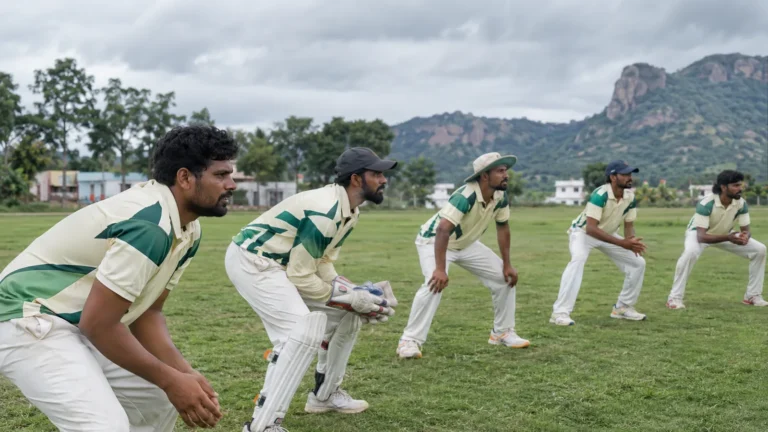
A keeper spends long stretches standing and then dives onto the ground, so the heavier 180 GSM knit makes sense. It resists scraping on hard turf and keeps the goalkeeper’s contrasting colour looking clean through the second half.
Substitutes and staff in tracksuit tops or bibs are a different case. They warm up in short bursts and then sit, so the lighter 140 GSM RIBRA-G (₹599) works as a warm-up top, even though it is a poor match shirt for football. Eighteen training shirts in PINDOT-N cost ₹7,182, which fits a modest club budget.
How do you read GSM on a swatch without a scale?
You cannot weigh it by hand, but you can feel the difference. Hold a 160 GSM swatch and a 180 GSM swatch together against a window. The lighter one passes more light and drapes more freely. Rub each between thumb and finger: the heavier knit feels denser and springs back more slowly.
If you want the numbers, we state them on every fabric page. Ask on WhatsApp for both swatches at the same time, because comparing two side by side tells you more than reading one alone.
How do you order a football jersey in the right GSM?
Send your squad size, colours and kickoff time to +91 78456 55105 on WhatsApp. The free mockup arrives in 24 hours. Ask for the 160 GSM and 180 GSM swatches together and compare them by hand.
Delivery is 7 to 10 working days from design approval. The minimum order is 5 pieces, with names, numbers and logo in the price. Browse the football jerseys page and the jersey fabrics hub for the rest.
Fabrics in this guide
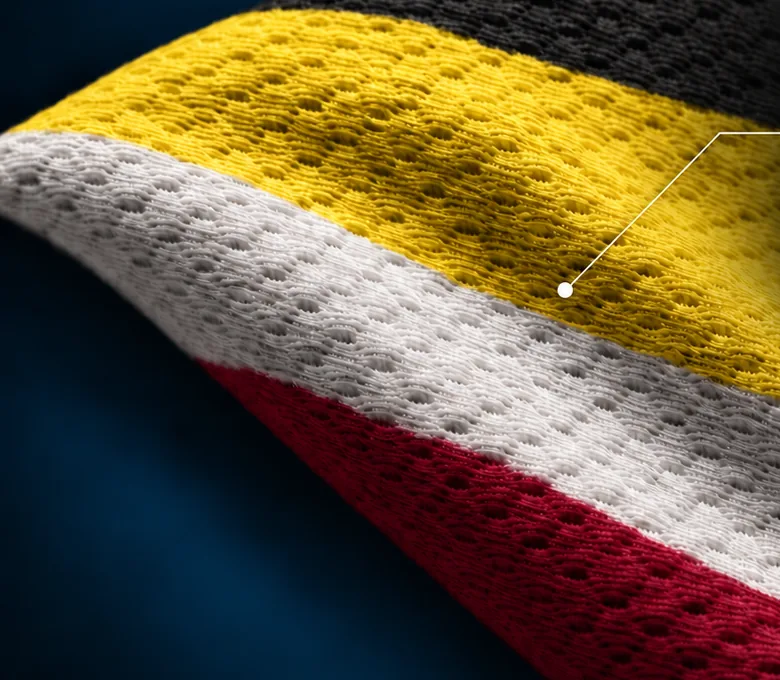 HEXA-B Football mesh, 160 GSM
₹699 per jersey with names and numbers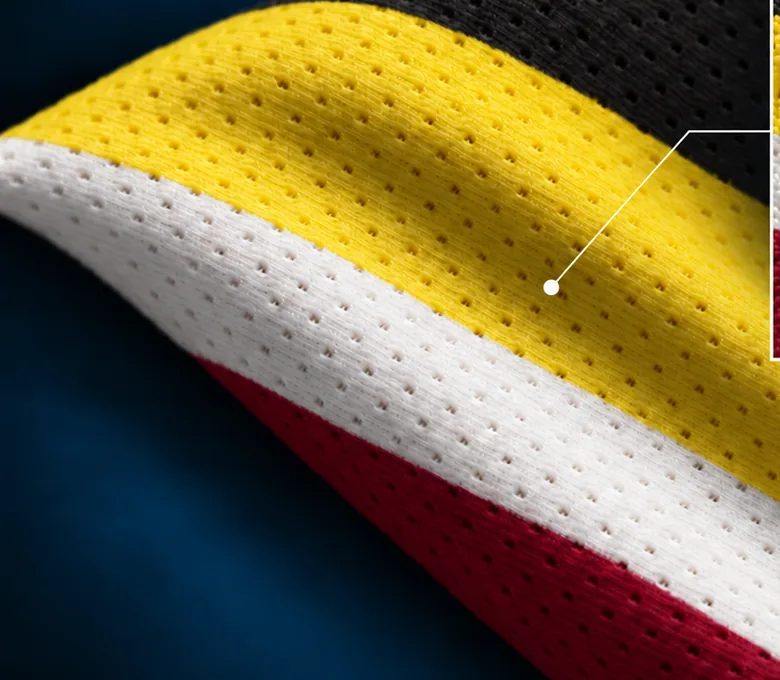 DOTTA-F Pinhole dot mesh, 160 GSM
₹599 per jersey with names and numbers PINDOT-N Pinhole micro dot knit, 180 GSM
₹399 per jersey with names and numbers
Frequently asked questions
What GSM is best for a football jersey?
For match play, 160 GSM is the practical choice. Our HEXA-B at ₹699 and DOTTA-F at ₹599 are both 160 GSM meshes. Heavier 180 GSM PINDOT-N at ₹399 suits training, school football and rough grounds.
What does GSM mean on a football jersey?
GSM means grams per square metre: how much a square metre of the fabric weighs. A higher GSM means more cloth. Our fabrics run from 140 to 180 GSM, and the knit matters as much as the number.
Is 160 GSM good for a football jersey?
Yes. It is light enough to run in and strong enough for normal tugging. HEXA-B and DOTTA-F, both 160 GSM, score 3 out of 3 for football on our scale and carry wicking, UV and anti-microbial finishes.
Is a lighter football jersey always better?
No. RIBRA-G is our lightest at 140 GSM but scores only 1 for football, because it is a close rib knit with no open cells. Weight and knit have to be read together.
Which GSM is cheapest for football?
The 180 GSM PINDOT-N at ₹399 is our cheapest fabric with a football fit score of 3 out of 3. It has no wicking, UV or anti-microbial finish.
Get Your Free Quote
Tell us about your team kit. We send a free design mockup on WhatsApp within 24 hours.
Or WhatsApp us directly: +91 95003 97105
Watch Our Custom Jerseys
See real Jaypee Sports team kits in action. Tap to play.