In this article
- Key takeaways
- Which is better, grid-e vs dotta-f badminton jerseys?
- What are the specs of GRID-E and DOTTA-F?
- How does each fabric handle smashes, lunges and quick footwork?
- Does a perforated shirt matter in an indoor hall?
- How do they look on court?
- How do they compare across racket sports and field sports?
- How should each shirt be washed between sessions?
- Which fabric fits each badminton situation?
- What does the ₹100 gap buy a badminton player?
- Pick GRID-E or pick DOTTA-F: the verdict
- How do you order badminton jerseys?
- Fabrics in this guide

By Nishanth, founder of Jaypee Sportswear. Making custom team jerseys since 2012 at our own sublimation unit in Thanjavur. Updated 14 November 2026.
For grid-e vs dotta-f badminton, pick GRID-E at ₹499 (fit score 3 out of 3, 170 GSM) for cool halls and polo looks. Pick DOTTA-F at ₹599 (fit score 2, 160 GSM) for hot halls and heavy sweaters. Only DOTTA-F has UV, wicking and anti-microbial finishes.
Key takeaways
- GRID-E scores 3 out of 3 for badminton at ₹499; DOTTA-F scores 2 at ₹599.
- DOTTA-F is 160 GSM with eyelets and three finishes; GRID-E is 170 GSM, closed, with no finishes.
- GRID-E scores 3 for table tennis too, so racket clubs can use one fabric.
- Minimum order is 5 pieces, with a free mockup in 24 hours and delivery in 7 to 10 working days.
Which is better, grid-e vs dotta-f badminton jerseys?
GRID-E scores higher for badminton on our table (3 against 2) and costs ₹499 against ₹599. DOTTA-F is the cooler shirt, with eyelets, 160 GSM and three performance finishes, so it is the one to take to a hot, crowded hall.
The choice here splits on temperature. A badminton hall without much air movement can feel warm after a few games, and that is where a perforated shirt pays back. If your hall is cool, GRID-E is the sensible buy. Our overall DOTTA-F vs GRID-E page covers every sport; this page looks only at the court.
What are the specs of GRID-E and DOTTA-F?
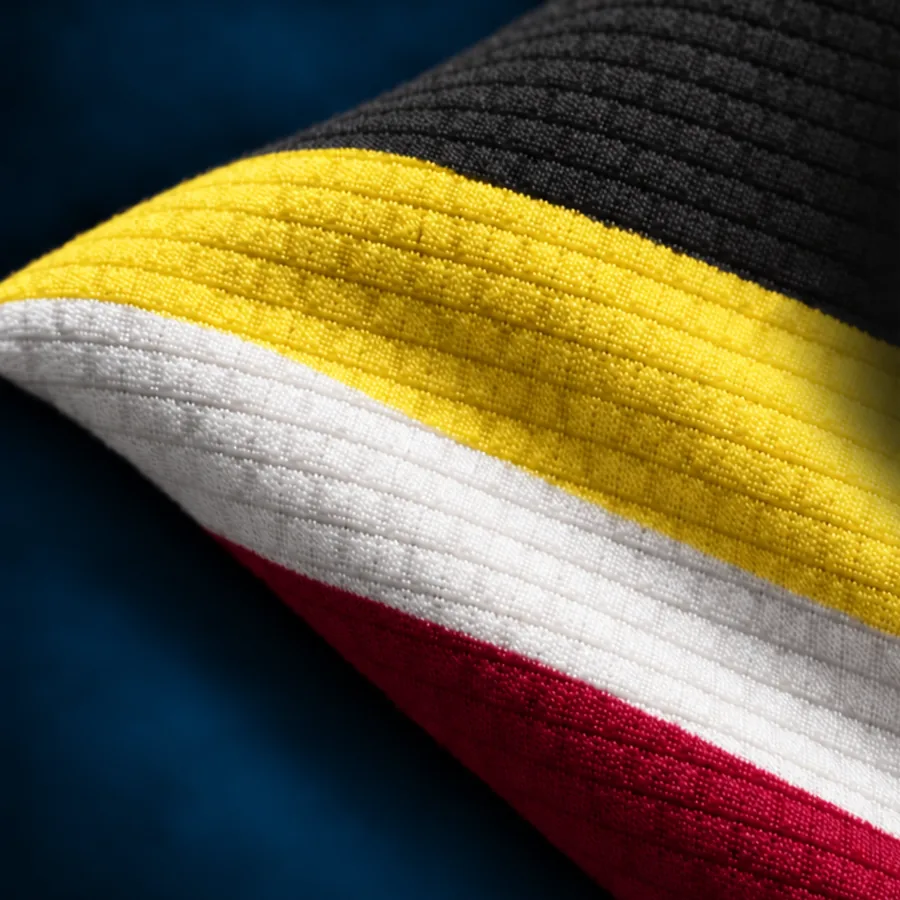
GRID-E is a closed 170 GSM knit with no finishes, and DOTTA-F is a 160 GSM dot mesh with eyelets and three finishes. DOTTA-F is lighter by 10 GSM.
| Spec | GRID-E | DOTTA-F |
|---|---|---|
| Tier | Club | Pro |
| Knit | Grid micro knit, no holes | Pinhole dot mesh, with eyelets |
| GSM | 170 | 160 |
| Price per jersey | ₹499 | ₹599 |
| Finishes | No UV protection, no moisture-wicking, no anti-microbial finish | UV protection, moisture-wicking, anti-microbial |
| Badminton fit score | 3 | 2 |
| Best for | Team polos, badminton, table tennis, club and corporate uniforms | Football, running singlets, gym tanks, training bibs, side panels |
The detail pages are the GRID-E page and the DOTTA-F page. Both are 100% polyester, sublimated all over, so the colour is in the fibre. Names, numbers and logo are included in each price.
How does each fabric handle smashes, lunges and quick footwork?
Both stretch enough for a full overhead swing, since both are knits. A knit forms loops of yarn that can extend in several directions, which the Wikipedia entry on knitting contrasts with the straight threads of a woven fabric.
The difference is weight and openness. A smash lifts the shirt up the torso and a deep lunge drags it down again. A lighter 160 GSM shirt moves with less pull on the shoulders, and DOTTA-F is lighter. GRID-E at 170 GSM is a little more settled, which some players prefer because the shirt stays put and does not ride up. That is a feel difference rather than a measured one, so ask for both swatches before you decide.
Doubles players also stand close to each other, and a collar helps a team look matched. GRID-E is built as a polo fabric, so collars, plackets and cuffs sit well on it. DOTTA-F is more at home as a round-neck sport shirt.
Does a perforated shirt matter in an indoor hall?
It matters if the hall is warm. Eyelets let heat and moisture leave through the fabric, while a closed knit holds them against the skin for longer.
Indoor courts vary. A large modern hall with ventilation may be comfortable in any shirt. A small club hall with closed windows can feel much hotter, and players there will feel the difference between the shirts by the third game. No sun reaches a hall player, so the UV protection on DOTTA-F is not useful indoors, and what you pay for is the wicking and the airflow.
Polyester absorbs very little water, as the Wikipedia entry on polyester notes, so sweat stays on the surface and needs somewhere to go. Eyelets give it a route, and GRID-E has none.
How do they look on court?
GRID-E looks like a smooth polo and DOTTA-F looks like a sports shirt with a fine dotted texture. For a club that wants a uniform look at tournaments, GRID-E is easier to dress with a collar and a chest logo.
The eyelets on DOTTA-F are small enough to disappear into a busy pattern, so all-over designs suit it. A plain colour with a flat chest logo shows the dots up close. If your design is a clean single colour with a crest, GRID-E gives the neater face.
How do they compare across racket sports and field sports?
GRID-E scores 3 for badminton and table tennis, and DOTTA-F scores 3 for volleyball, running and football. If your club plays only racket sports, GRID-E covers every section for ₹100 less.
Badminton3 / 2
Table tennis3 / 2
Tennis2 / 2
Cricket2 / 2
Volleyball2 / 3
Running1 / 3
Football1 / 3
The chart shows two different homes: GRID-E in indoor racket sports and DOTTA-F in running and field sports. A sports club with a badminton section and a football section would likely use both fabrics, one per section. For a full list, see the sport-by-sport fabric page. There is no separate badminton money page yet, so that page is the right place to start.
How should each shirt be washed between sessions?
Wash both at 30°C inside out with mild detergent, skip softener and dry in shade. The sublimation ink is in the fibre, so it does not crack or peel. A badminton bag usually sits closed for hours, so the shirt without an anti-microbial finish, GRID-E, should come out and be washed the same day. DOTTA-F has the finish, which gives you a little more room, but the habit is worth keeping for both.
Which fabric fits each badminton situation?
Match the fabric to the hall and the format of play using the table.
| Badminton situation | Pick | Why |
|---|---|---|
| Club night, two hours of social doubles | GRID-E | Top badminton score at ₹499 |
| Hot hall with no air conditioning | DOTTA-F | Eyelets and 160 GSM let heat out |
| Team wants a collared polo look | GRID-E | Closed grid knit is our Club polo fabric |
| Player who sweats through a shirt in one game | DOTTA-F | Wicking finish moves sweat off the skin |
| Inter-college league, matches over several days | DOTTA-F | Anti-microbial finish helps shirts that are re-worn |
| Badminton plus table tennis, one design | GRID-E | Scores 3 for both |
See the full fabric range in the jersey fabrics hub.
What does the ₹100 gap buy a badminton player?
It buys three finishes and about 6 percent less fabric weight (160 against 170 GSM), plus the airflow of the eyelets. UV protection is the one finish you will rarely use indoors.
For a club of eight, that is ₹800. Put it towards a better print or a second kit if the hall is cool. Put it into DOTTA-F if players regularly leave the court soaked. The tiers are compared in detail on our Pro vs Club page.
Pick GRID-E or pick DOTTA-F: the verdict
Pick GRID-E if your hall is well ventilated, your club wants a collared look and your budget is tight. Pick DOTTA-F if your hall is hot, your players sweat heavily or the same shirts also go to a volleyball or running squad.
One practical split is DOTTA-F for the players who compete and GRID-E polos for the team manager and scorer, all in the same colour scheme.
How do you order badminton jerseys?
Message us on WhatsApp at +91 78456 55105 with your colours and logo and ask for swatches of both. We send a free mockup in 24 hours. Minimum order is 5 pieces, sizes run XS to XXXL at the same price, and delivery is 7 to 10 working days from design approval.
Fabrics in this guide
 GRID-E Grid micro knit, 170 GSM
₹499 per jersey with names and numbers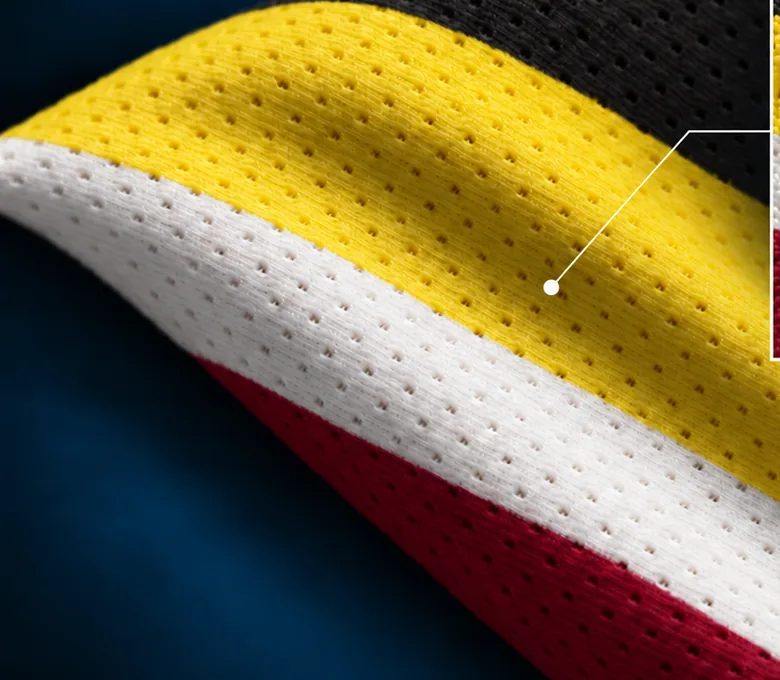 DOTTA-F Pinhole dot mesh, 160 GSM
₹599 per jersey with names and numbers
Frequently asked questions
Is GRID-E or DOTTA-F better for badminton?
GRID-E has the higher fit score, 3 against 2, and costs ₹499 against ₹599. DOTTA-F is cooler because of its eyelets and 160 GSM weight, so it suits hot halls and heavy sweaters.
Does DOTTA-F work for badminton?
Yes, it scores 2 out of 3. DOTTA-F is a 160 GSM pinhole dot mesh with wicking, anti-microbial and UV finishes. Indoors the UV finish is rarely needed, but the airflow and wicking help.
Does GRID-E have a moisture-wicking finish?
No. GRID-E, at ₹499 and 170 GSM, has no UV protection, no moisture-wicking and no anti-microbial finish. It is a closed micro knit with a polo look, best for cooler halls and casual play.
Which fabric suits a badminton club that also plays table tennis?
GRID-E. It scores 3 for both badminton and table tennis, so one design and one fabric can cover both sections at ₹499 per jersey.
What is the minimum order for badminton jerseys?
Minimum order is 5 pieces. Bigger orders get a lower rate per piece. Names, numbers and logo are included, and delivery takes 7 to 10 working days from design approval.
Get Your Free Quote
Tell us about your team kit. We send a free design mockup on WhatsApp within 24 hours.
Or WhatsApp us directly: +91 95003 97105
Watch Our Custom Jerseys
See real Jaypee Sports team kits in action. Tap to play.