In this article
- Key takeaways
- Can you iron a polyester jersey?
- How to iron a polyester jersey without damage, step by step
- What heat can polyester take?
- Does ironing damage a sublimated print?
- What if the jersey already has a shiny patch or a press mark?
- How can I remove wrinkles without an iron?
- Which jerseys need pressing most often?
- Which fabric is easier to keep neat?
- Pick QUARTZ-A if… pick LINEA-S if…
- How do I order jerseys from Jaypee Sportswear?
- Fabrics in this guide

By Nishanth, founder of Jaypee Sportswear. Making custom team jerseys since 2012 at our own sublimation unit in Thanjavur. Updated 17 November 2026.
How to iron a polyester jersey without damage: turn it inside out, set the iron to its lowest setting, put a thin cotton cloth between iron and jersey, and press and lift. Polyester softens at 67 to 81 °C. Sublimated colour sits in the fibre, so it will not crack, but heat can still mark the cloth.
Key takeaways
- PET has a glass transition of 67 to 81 °C and melts above 250 °C, so polyester softens well before it melts.
- Use the lowest iron setting, inside out, with a thin cotton cloth, and never press hard on names or numbers.
- Sublimated colour sits in the fibre of both QUARTZ-A (₹699) and LINEA-S (₹399) so it cannot crack or peel.
- Hanging a jersey on a hanger right after washing saves most ironing.
Can you iron a polyester jersey?
Yes, but only on the lowest heat, with a cloth between the iron and the jersey, and only when a wrinkle will not hang out by itself. Polyester is a thermoplastic. Wikipedia on polyester says such fibres may change shape after the application of heat, which is the whole reason for caution.
Most team jerseys never need an iron at all. This guide covers the cases that do, such as a final, a team photo or a club function. Our fabrics are listed on the jersey fabrics hub.
How to iron a polyester jersey without damage, step by step
Work on a clean, slightly damp jersey, turned inside out, with the iron on its lowest or synthetic setting and a thin cotton cloth in between. Press and lift. Do not slide the iron or leave it resting in one place.
- Step 1. Check the care label and your iron dial. Pick the lowest dot or the synthetic mark.
- Step 2. Wash out sweat and dirt first. Heat can lock marks into polyester, so never iron a dirty jersey.
- Step 3. Turn the jersey inside out and lay it flat on a firm, clean board.
- Step 4. Cover the area with a thin cotton cloth, such as an old handkerchief or pillow cover.
- Step 5. Test on an inner seam or the hem for a few seconds before touching a wider area.
- Step 6. Press for a moment with light weight, lift, and move to the next patch. Never press hard on a name, number or logo area.
- Step 7. Hang the jersey straight away and let it cool before folding.
If you turn the steam on, keep the iron above the cloth, because the soleplate touching the surface is what leaves a mark. Our wash, dry and store guide covers the steps before and after this one.
What heat can polyester take?
The figures that matter are the glass transition and the melting point. Wikipedia on PET, the polymer behind polyester fibre, lists a glass transition temperature of 67 to 81 °C and a melting point above 250 °C.
Between those two numbers the plastic softens but does not melt, and that is where an over-hot iron leaves a shiny patch or a flattened texture. I have no iron plate temperature from a source, so I will not map dial settings to degrees. Start at the bottom of your dial and test.
| Do | Avoid |
|---|---|
| Lowest or synthetic setting | Cotton or linen setting |
| Thin cotton cloth between iron and jersey | Iron plate directly on the print |
| Inside out, light pressure, lift and press | Sliding or resting in one spot |
| Wash out sweat before pressing | Ironing a dirty or sweaty jersey |
| Cool on a hanger | Folding while still warm |
Does ironing damage a sublimated print?
The colour will not crack or peel, because sublimation puts the dye into the fibre and does not leave a film on top. Heat can still mark the cloth itself. A printed jersey is polyester underneath the colour, so the same limits apply to the whole face, names and numbers included.
Our names, numbers and logos are part of that same print and are in the price. For why the colour stays, see why sublimated jerseys do not fade.
What if the jersey already has a shiny patch or a press mark?
A flattened or shiny patch comes from heat softening the polyester surface, and I know of no home fix that reverses it with certainty. Wash the jersey, let it dry fully, and see whether the mark relaxes. If it stays, use that jersey for practice and keep the next one clear of the iron.
Check before a tournament, not on the morning of the match. A spare kit costs ₹399 in LINEA-S or ₹699 in QUARTZ-A per jersey, and the free mockup arrives in 24 hours if you need to order one.
How can I remove wrinkles without an iron?
Hang the jersey on a hanger straight after washing, smooth it by hand with the seams pulled flat, and let it dry in shade. For a stubborn crease, hang it in a bathroom while a hot shower runs, then leave it in open air until it is dry.
A jersey folded neatly while fully dry creases far less than one that was bundled damp. That alone saves most ironing for a weekend squad.
Which jerseys need pressing most often?
Kits worn for photos, finals and presentations, or worn after a long time in a kit bag. The chart compares QUARTZ-A (red) and LINEA-S (blue) on our fit scores. Both are 180 GSM, so the weight is the same and the difference is the finish and the knit.
Cricket3 / 3
Esports3 / 1
Tennis2 / 1
Badminton2 / 1
Volleyball2 / 2
Football2 / 1
| Sport | QUARTZ-A | LINEA-S |
|---|---|---|
| Cricket | 3 | 3 |
| Esports | 3 | 1 |
| Tennis | 2 | 1 |
| Badminton | 2 | 1 |
| Volleyball | 2 | 2 |
| Football | 2 | 1 |
Esports and tennis show the widest gap, 3 against 1 and 2 against 1. For cricket the two tie at 3 out of 3, so a gully side can look equally neat in either.
Which fabric is easier to keep neat?
I will not claim either one irons or creases better, because we have no test on that. What I can compare is on the table below.
| Spec | QUARTZ-A | LINEA-S |
|---|---|---|
| Tier | Elite | Budget-friendly |
| Knit | Diamond knit | Micro grid knit, no holes |
| GSM | 180 | 180 |
| Price per jersey | ₹699 | ₹399 |
| UV, wicking, anti-microbial finishes | Yes | None |
QUARTZ-A is the 180 GSM diamond knit at ₹699 for finals and tournament kits. LINEA-S is the 180 GSM micro grid knit at ₹399 with no finish. A kit pressed once before a final is a small job in either.
Pick QUARTZ-A if… pick LINEA-S if…
Pick QUARTZ-A (₹699) if the jersey is for finals, an athleisure look or a team that wants one fabric for matches and warm-ups. Pick LINEA-S (₹399) if the kit is for gully cricket, a school sports day or a first kit, where a hanger and a morning in shade will do.
For 15 jerseys the difference is ₹4,500 (15 x ₹300), before the bulk rate. The buyers guide sets the other fabrics beside these two.
How do I order jerseys from Jaypee Sportswear?
Send your sport, quantity and colours on WhatsApp at +91 78456 55105. The free mockup comes in 24 hours, the minimum order is 5 pieces, and delivery takes 7 to 10 working days from design approval.
Names, numbers and logo are in the price, and sizes XS to XXXL cost the same. Swatches can be sent on WhatsApp too. Chennai teams can see custom jerseys in Chennai for the K.K. Nagar point.
Fabrics in this guide
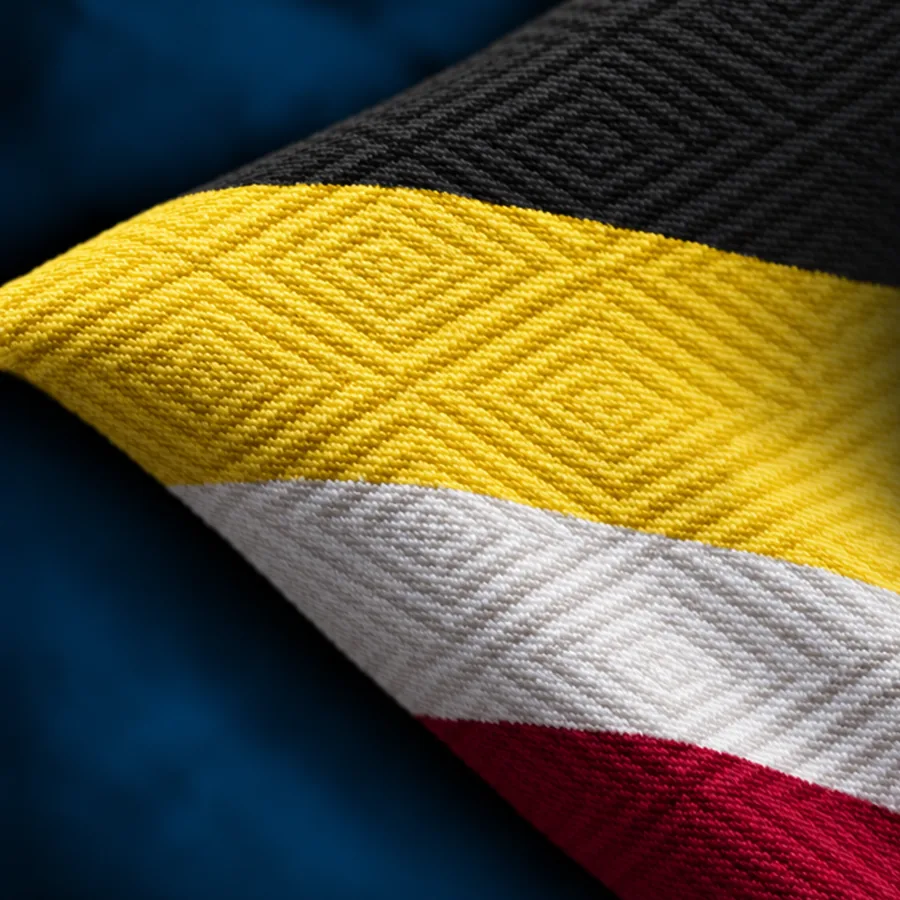 QUARTZ-A Diamond knit, 180 GSM
₹699 per jersey with names and numbers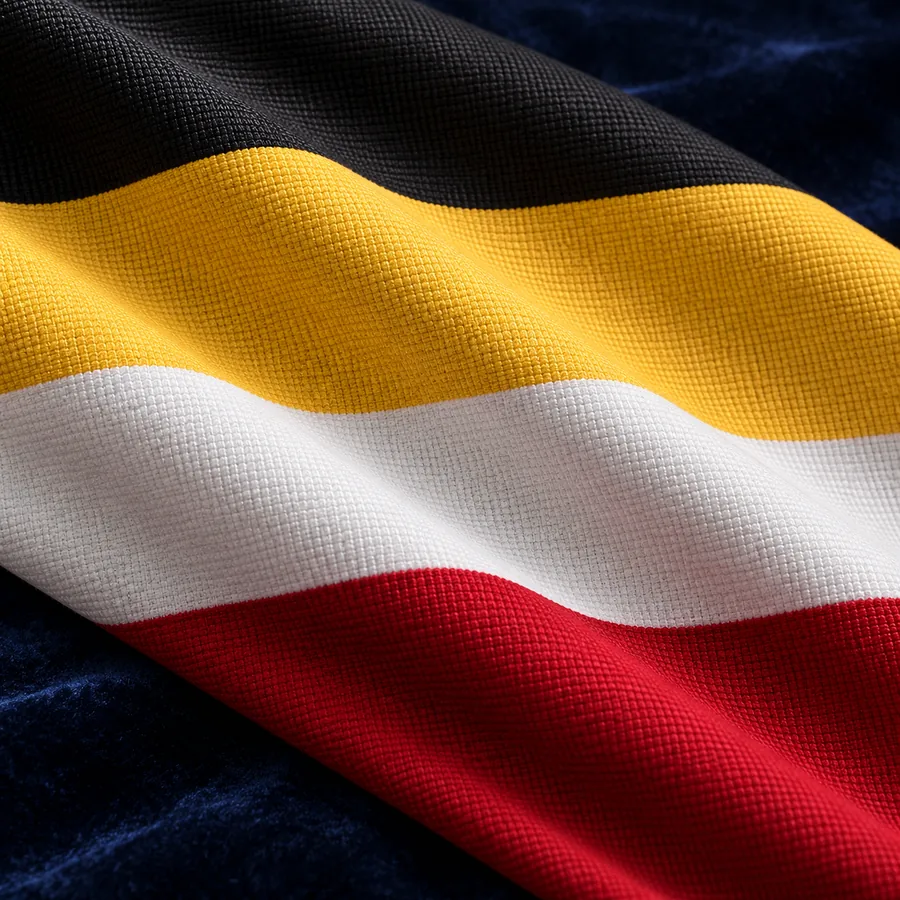 LINEA-S Micro grid knit, 180 GSM
₹399 per jersey with names and numbers
Frequently asked questions
Can you iron a polyester jersey?
Yes, on the lowest or synthetic setting, inside out, with a thin cotton cloth between the iron and the jersey. Press and lift, and avoid resting the iron on names, numbers or logos.
Will ironing ruin the print on a sublimated jersey?
The colour is in the fibre, so it will not crack or peel. Heat can still mark or flatten the polyester, so the same low-heat rules apply to the printed area.
What temperature is safe for polyester?
Wikipedia lists a glass transition of 67 to 81 °C and a melting point above 250 °C for PET. We have no iron plate figure, so start on the lowest dial setting and test on a seam.
How do I get wrinkles out of a jersey without ironing?
Hang it on a hanger straight after washing, pull the seams flat, and dry it in shade. A hot shower in a closed bathroom can relax a stubborn crease.
Does a QUARTZ-A jersey need ironing?
Rarely. Most team kits dry flat on a hanger. A quick press before a final is fine, using the same low-heat steps. QUARTZ-A is 180 GSM and costs ₹699.
Get Your Free Quote
Tell us about your team kit. We send a free design mockup on WhatsApp within 24 hours.
Or WhatsApp us directly: +91 95003 97105
Watch Our Custom Jerseys
See real Jaypee Sports team kits in action. Tap to play.