In this article
- Key takeaways
- Which is better, polyester vs nylon sportswear?
- How do polyester and nylon compare on the properties that matter?
- Why do sublimated jerseys use polyester and not nylon?
- Where would nylon beat polyester in a team kit?
- What does a polyester jersey look like across our range?
- Which sports suit these polyester knits?
- How do the two fibres behave when a player sweats?
- Does heat or care matter differently for each fibre?
- Pick polyester if… pick nylon if…
- What does a 16-player order cost?
- How do I order jerseys from Jaypee Sportswear?
- Fabrics in this guide

By Nishanth, founder of Jaypee Sportswear. Making custom team jerseys since 2012 at our own sublimation unit in Thanjavur. Updated 15 November 2026.
For a printed team jersey, choose polyester: sublimation was built for it, and every Jaypee fabric is 100% polyester, from LINEA-S (180 GSM, ₹399) to HEXA-B (160 GSM, ₹699). Nylon has excellent abrasion resistance and high elongation, so it suits tights and bags. Polyester vs nylon sportswear is a choice of job.
Key takeaways
- Wikipedia calls polyester hydrophobic with low water absorption, and nylon highly resilient with excellent abrasion resistance.
- Dye sublimation was originally used on polyester, which is why all eight Jaypee fabrics are polyester.
- HEXA-B is 160 GSM at ₹699, QUARTZ-A is 180 GSM at ₹699 and LINEA-S is 180 GSM at ₹399.
- HEXA-B scores 3 out of 3 for handball, hockey, basketball and running; QUARTZ-A scores 2 in each.
- Sixteen jerseys cost ₹4,800 less in LINEA-S than in HEXA-B before the bulk rate.
Which is better, polyester vs nylon sportswear?
For a printed team jersey, polyester is the better fibre, mainly because sublimation is a polyester process. Nylon is tougher against scuffing and stretchier, so it earns its place in tights and bags. Every Jaypee jersey is 100% polyester, and the jersey fabrics hub lists all eight.
Below, each claim about the fibres comes from a page I opened, and I have left out any number the pages did not give.
How do polyester and nylon compare on the properties that matter?
Polyester resists water and nylon resists wear. Wikipedia’s polyester page calls polyester hydrophobic, with low water absorption and minimal shrinkage, and its nylon page lists excellent abrasion resistance, high elongation and high resilience for nylon.
| Property | Polyester | Nylon |
|---|---|---|
| Water | Hydrophobic, low water absorption | Less absorbent than wool or cotton, but hygroscopic: it takes up and gives off moisture with the humidity |
| Shrinkage | Minimal | Not stated on the page I read |
| Wear | High tenacity | Excellent abrasion resistance |
| Stretch | Set by the knit | High elongation, highly resilient |
| Dyeing | Disperse dyes only | Easily dyed |
The table has gaps on purpose. Neither page gives a moisture regain percentage, and I will not quote one from memory.
Why do sublimated jerseys use polyester and not nylon?
Sublimation dye bonds with the fibre, and the process was first used on polyester. Wikipedia’s dye-sublimation page says it works with polyester and polymer-coated substrates and was originally used for printing polyester fabrics. The polyester page adds that disperse dyes are the only class that can change the colour of polyester.
That is why our full-sublimation kits are polyester: the colour goes into the fibre, so a number or logo cannot crack or peel. I have not seen a source that says nylon takes the same print in the same way, so I make no claim about it.
Where would nylon beat polyester in a team kit?
Nylon beats polyester where the fabric rubs and stretches hard: base-layer tights, bags, ball-stop netting, and warm-up bottoms. The nylon page lists high elongation and excellent abrasion resistance, and Wikipedia’s sportswear page says gym clothing that needs stretch is likely to use cotton, nylon or lycra.
A jersey has a different job. It is printed edge to edge, worn for an hour or two, and judged on colour and heat. For that job nylon’s extra toughness is not what a squad pays for, and polyester’s low water absorption helps the finishes do their work.
Our polyester vs spandex stretch guide covers the stretch side of the question.
What does a polyester jersey look like across our range?
All eight Jaypee fabrics are 100% polyester knits, so the choice is between knits, not fibres. HEXA-B is the 160 GSM honeycomb mesh at ₹699, QUARTZ-A is the 180 GSM diamond knit at ₹699, and LINEA-S is the 180 GSM micro grid knit with no holes at ₹399.
| Spec | HEXA-B | QUARTZ-A | LINEA-S |
|---|---|---|---|
| Tier | Elite | Elite | Budget-friendly |
| Knit | Honeycomb football mesh | Diamond knit | Micro grid knit, no holes |
| GSM | 160 | 180 | 180 |
| Price per jersey | ₹699 | ₹699 | ₹399 |
| Finishes | UV protection, moisture-wicking, anti-microbial | UV protection, moisture-wicking, anti-microbial | None |
HEXA-B and QUARTZ-A carry UV, wicking and anti-microbial finishes. LINEA-S carries none of them, and the finish gap is a large part of what the ₹300 buys.
Which sports suit these polyester knits?
HEXA-B scores 3 in handball, hockey, basketball and running, while QUARTZ-A leads nowhere but ties in cricket. The chart sets HEXA-B (red) against QUARTZ-A (blue) with our fit scores out of 3.
Handball3 / 2
Hockey3 / 2
Basketball3 / 2
Football3 / 2
Cricket3 / 3
Running3 / 1
Rugby2 / 2
| Sport | HEXA-B | QUARTZ-A | LINEA-S |
|---|---|---|---|
| Handball | 3 | 2 | 1 |
| Hockey | 3 | 2 | 1 |
| Basketball | 3 | 2 | 1 |
| Football | 3 | 2 | 1 |
| Cricket | 3 | 3 | 3 |
| Running | 3 | 1 | 2 |
| Rugby | 2 | 2 | 1 |
Rugby is the one sport where both Elite fabrics score 2 and the closed knit stays ahead of the budget fabric by one point. Our sport-by-sport fabric guide ranks every fabric for each of the sixteen sports.
How do the two fibres behave when a player sweats?
Polyester keeps little water in the fibre, so sweat stays on the surface where a wicking finish and the knit holes can move it. The nylon page says nylon is less absorbent than wool or cotton, yet it also calls nylon hygroscopic, meaning it takes up and gives off moisture as the humidity changes.
On a humid Chennai evening that difference is worth thinking about, even without a measured figure. I do not have a drying-time number for either fibre, and neither page gives one. What I can say is that our own Elite and Pro polyester fabrics add a wicking finish on top, while LINEA-S, GRID-E and PINDOT-N have none.
Does heat or care matter differently for each fibre?
Both fibres have high melting points, so the fibre is rarely what fails first. Wikipedia gives a melting point of 220 °C for nylon 6 and 265 °C for nylon 66, and 160 to 280 °C for the aliphatic-aromatic polyesters that include PET.
Direct heat can still mark a printed surface, so keep a hot iron away from it. Wash it inside out in cool water, dry it in shade and skip the iron on the print area, whichever fibre the kit is made from.
Pick polyester if… pick nylon if…
Pick polyester for the printed jersey: it is the fibre sublimation was built for, and every fabric we sell is made of it. Pick nylon, from another supplier, for a standalone item such as a stretch base layer or a hard-wearing kit bag, where abrasion matters more than the print.
Inside our polyester range, pick HEXA-B for handball, hockey, basketball and running. Pick QUARTZ-A for a closed-face finals kit. Pick LINEA-S when ₹399 is the limit and you do not need the finishes.
What does a 16-player order cost?
Sixteen HEXA-B or QUARTZ-A jerseys cost ₹11,184 and sixteen LINEA-S cost ₹6,384, before the bulk rate and with names, numbers and logo included. The Elite gap is ₹4,800 across the squad, and our Elite vs Budget page explains what it buys. Our jersey fabric guide has the rest.
How do I order jerseys from Jaypee Sportswear?
Send your sport, quantity and colours on WhatsApp at +91 78456 55105. The free mockup comes in 24 hours, the minimum order is 5 pieces, and delivery takes 7 to 10 working days from design approval.
Names, numbers and logo are in the price, and sizes XS to XXXL cost the same. Swatches can be sent on WhatsApp too. Chennai teams can see custom jerseys in Chennai for the K.K. Nagar point.
Fabrics in this guide
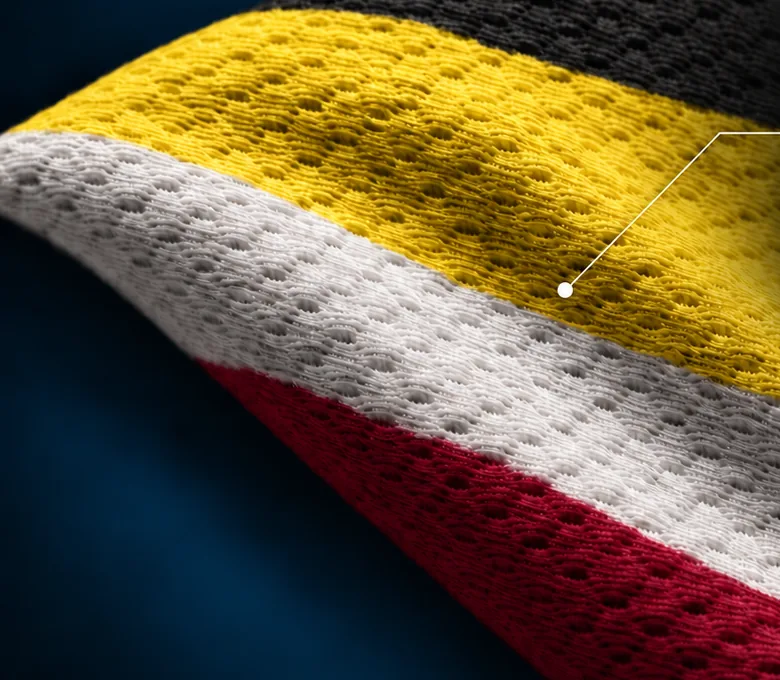 HEXA-B Football mesh, 160 GSM
₹699 per jersey with names and numbers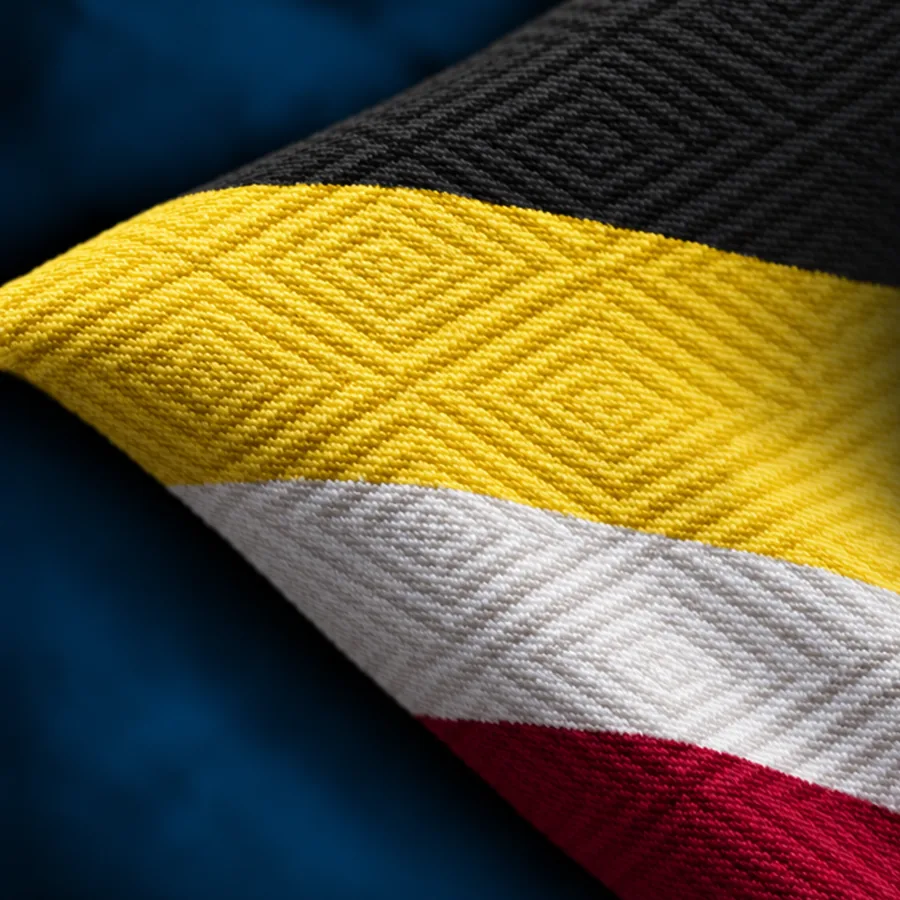 QUARTZ-A Diamond knit, 180 GSM
₹699 per jersey with names and numbers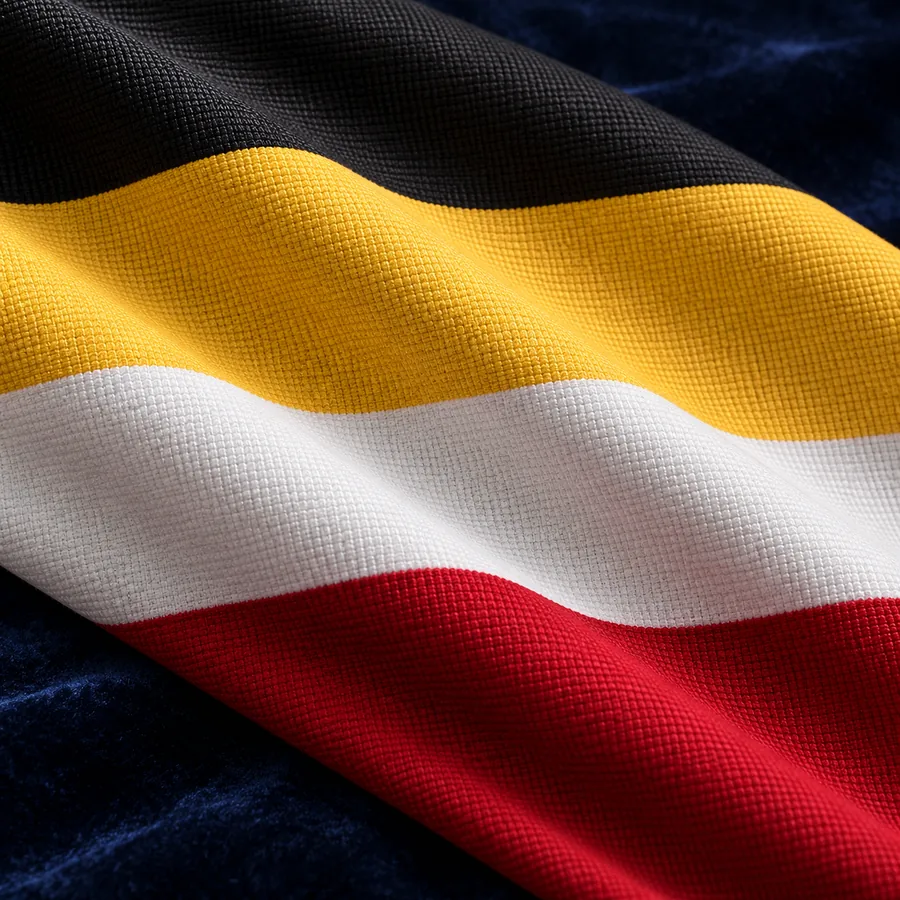 LINEA-S Micro grid knit, 180 GSM
₹399 per jersey with names and numbers
Frequently asked questions
Is polyester or nylon better for sports jerseys?
Polyester, for a printed jersey, because sublimation was developed for it and it absorbs little water. Nylon suits tights and bags. All eight Jaypee fabrics are 100% polyester.
Is nylon stronger than polyester?
Wikipedia lists excellent abrasion resistance for nylon and high tenacity for polyester, and gives no numbers for either. We make no strength claim beyond that.
Can you print sublimation on nylon?
Wikipedia describes sublimation as working with polyester and polymer-coated substrates, and as originally used on polyester fabric. All our full-sublimation kits are polyester, so we make no claim about printing nylon.
Does polyester absorb sweat?
Very little. Wikipedia describes polyester as hydrophobic with low water absorption. Our Elite and Pro fabrics add a moisture-wicking finish; LINEA-S, GRID-E and PINDOT-N have no such finish.
Which Jaypee fabric is best for handball?
HEXA-B, our 160 GSM honeycomb mesh at ₹699, scores 3 out of 3 for handball by our house scores. QUARTZ-A, DOTTA-F and PINDOT-N score 2.
Get Your Free Quote
Tell us about your team kit. We send a free design mockup on WhatsApp within 24 hours.
Or WhatsApp us directly: +91 95003 97105
Watch Our Custom Jerseys
See real Jaypee Sports team kits in action. Tap to play.