In this article
- Key takeaways
- What does volleyball jersey GSM mean for a player?
- Which volleyball jersey GSM does each fabric have?
- Is a lighter volleyball jersey GSM better for spiking?
- When is a 180 GSM volleyball jersey the better choice?
- How does volleyball jersey GSM change a short sleeve against a sleeveless cut?
- Does wet sand add weight to a volleyball jersey?
- Does GSM change how long a volleyball jersey lasts?
- Which volleyball jersey GSM suits each surface?
- Does GSM change the price of a volleyball jersey?
- How do I order a volleyball jersey in the GSM I want?
- Fabrics in this guide

By Nishanth, founder of Jaypee Sportswear. Making custom team jerseys since 2012 at our own sublimation unit in Thanjavur. Updated 13 November 2026.
Volleyball jersey GSM is the cloth weight in grams per square metre. Stay between 140 and 170 GSM for most play: DOTTA-F (160 GSM pinhole mesh, ₹599) scores 3 out of 3, and RIBRA-G (140 GSM, ₹599) is the lightest. QUARTZ-A (180 GSM, ₹699) and LINEA-S (180 GSM, ₹399) suit prints and budgets. Minimum order is 5 pieces.
Key takeaways
- Our fabrics run from 140 GSM (RIBRA-G) to 180 GSM (QUARTZ-A, LINEA-S, PINDOT-N).
- DOTTA-F at 160 GSM and ₹599 is the only 3 out of 3 fabric for volleyball; RHOMB-H at 175 GSM scores 1.
- Seven of eight fabrics score 2 or 3, so GSM breaks ties more than it decides.
- A squad of 12 costs ₹7,188 in DOTTA-F and ₹4,788 in LINEA-S, before any bulk rate.
- Free mockup in 24 hours; delivery 7 to 10 working days; minimum order 5 pieces.
Volleyball jersey GSM is the weight of the shirt cloth in grams per square metre, and for volleyball I would stay between 140 and 170. DOTTA-F at 160 GSM and ₹599 scores 3 out of 3 on our scale, and RIBRA-G at 140 GSM is the lightest. Heavier 180 GSM cloth is not wrong, but it feels warm under an overhead swing and soaks up more when the shirt gets wet.
Our fabrics run from 140 to 180 GSM and I am speaking only for those. Volleyball is unusual because seven of our eight fabrics score 2 or 3, so GSM is a tie-breaker here and not the main filter it is in some other sports.
What does volleyball jersey GSM mean for a player?
GSM tells you how much polyester is in each square metre of shirt. In volleyball the cloth has to follow a hitter’s arm through a full overhead arc, stay light after a few sets of sweat and sometimes a roll in the sand. A lower GSM adds less weight to every one of those moments. The general idea is in our GSM explainer.
Wet cloth is heavier than dry cloth, and that is where the difference between 140 and 180 shows. A shirt with more cloth holds more sweat and more sand when it is soaked, which a player feels at the shoulder by the third set.
Which volleyball jersey GSM does each fabric have?
This table lists all eight, lightest first, with our fit score out of 3 for volleyball. Notice how flat the right-hand column is.
| Fabric | GSM | Knit | Price | Volleyball fit out of 3 |
|---|---|---|---|---|
| RIBRA-G | 140 | Rib ladder knit | ₹599 | 2 |
| HEXA-B | 160 | Honeycomb mesh | ₹699 | 2 |
| DOTTA-F | 160 | Pinhole dot mesh | ₹599 | 3 |
| GRID-E | 170 | Grid micro knit | ₹499 | 2 |
| RHOMB-H | 175 | Micro rhombus knit | ₹599 | 1 |
| QUARTZ-A | 180 | Diamond knit | ₹699 | 2 |
| LINEA-S | 180 | Micro grid, no holes | ₹399 | 2 |
| PINDOT-N | 180 | Pinhole micro dot | ₹399 | 2 |
RIBRA-G 140
2 / 3
HEXA-B 160
2 / 3
DOTTA-F 160
3 / 3
GRID-E 170
2 / 3
RHOMB-H 175
1 / 3
QUARTZ-A 180
2 / 3
LINEA-S 180
2 / 3
PINDOT-N 180
2 / 3
The best score sits at 160 GSM, in the middle of the lighter half, and the only 1 sits at 175 GSM. That tells you GSM helps but does not decide.
Is a lighter volleyball jersey GSM better for spiking?
Generally yes. RIBRA-G at 140 GSM carries the least cloth, so a short sleeve falls back into place after a spike. DOTTA-F at 160 GSM adds pinholes, and that is why it ranks first: it is light, and it lets heat out during a long rally.
I would not take that to extremes. Very light cloth can cling when wet, and a shirt that clings shows every movement. A mid-light 160 GSM mesh gives players weight enough to hang cleanly and little enough to move.
When is a 180 GSM volleyball jersey the better choice?
When the print matters or the money does. QUARTZ-A at 180 GSM and ₹699 is firm enough to hold a sleeve logo flat and has wicking, UV and anti-microbial finishes. LINEA-S at ₹399 is a closed 180 GSM knit that scores 2 as well, and it suits school and casual play. LINEA-S has no finishes, so on a hot or humid day plan extra water and a spare shirt.
For outdoor tournaments, read the India Meteorological Department district forecast the week before. A hot spell is a reason to move down the table to a lighter fabric.
How does volleyball jersey GSM change a short sleeve against a sleeveless cut?
A sleeve adds cloth exactly where the arm moves most. In a 180 GSM knit the sleeve edge is firm, so it can dig into the upper arm on a spike. At 140 or 160 GSM it folds softly and falls back. For a sleeveless volleyball cut, the cloth sits on the shoulder only, so a 140 GSM rib knit like RIBRA-G is light enough to forget.
If the team wants sleeves for sun on the arms, remember that the UV finish is in the cloth of the five Elite and Pro fabrics, so a short sleeve in DOTTA-F gives some protection and the same sleeve in a budget knit gives none from the finish.
Does wet sand add weight to a volleyball jersey?
It can. After a few dives the shirt holds both sweat and damp sand, and more cloth means more of both. That is the reason I steer beach teams towards 160 GSM or lighter. The shirt will still pick up some sand in any fabric, so rinse it after the match and let it dry in the shade.
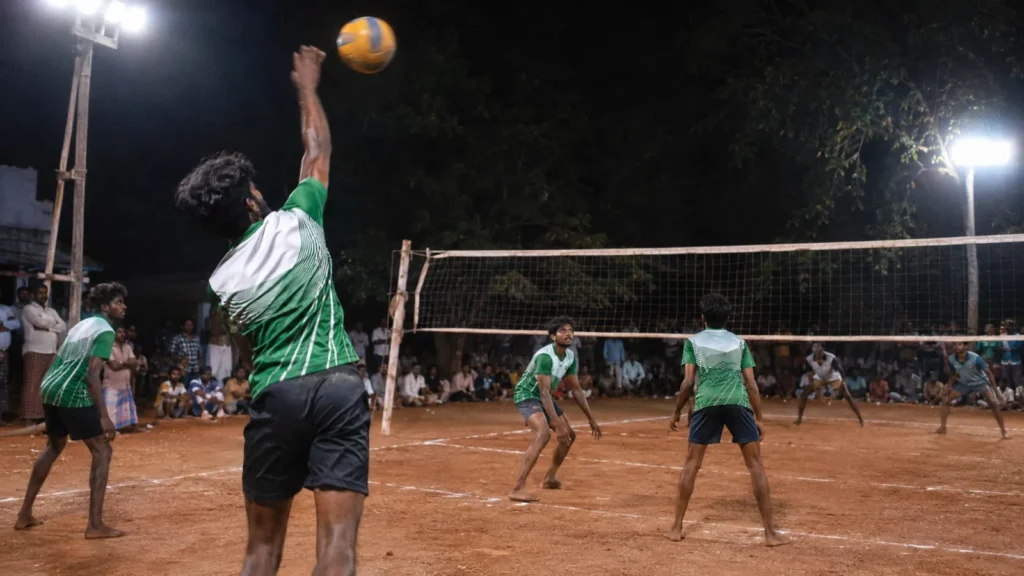
On a mud court at night, under floodlights, the air is often still and humid, and the shirt takes longer to dry between games. A mid-weight cloth with the three finishes will serve you better there than a heavy closed knit without them.
Does GSM change how long a volleyball jersey lasts?
Only a little. All of our fabrics are 100% polyester with full sublimation, so the colour stays in the fibre at any weight. Heavier cloth tends to feel more solid in the hand, but wear comes from sand, scrubbing and hot dryers as much as from weight. I do not have a wash count to quote, so I will not make one up.
Which volleyball jersey GSM suits each surface?
This second table links surface and weight. The picks are my reading of how weight behaves, not a measured result.
| Surface | GSM to look at | Fabric | Reason |
|---|---|---|---|
| Beach sand | 160 | DOTTA-F | Light when wet, small pinholes |
| Clay or mud court | 170 to 180 | GRID-E, QUARTZ-A | Firm face that dust does not cling to as easily |
| Indoor hall, warm | 140 to 160 | RIBRA-G, HEXA-B | Less cloth in still air |
| Night match under floodlights | 160 | DOTTA-F | Humid evening air, so airflow and wicking |
Does GSM change the price of a volleyball jersey?
Barely. The lightest, RIBRA-G, and the mesh DOTTA-F are both ₹599, and the heaviest range from ₹399 to ₹699. You pay for the knit and the finishes, so choose the GSM that suits the court and then the price tier you can afford. Twelve players cost ₹7,188 in DOTTA-F and ₹4,788 in LINEA-S.
The best fabric for volleyball jersey post ranks all eight, the 180 against 220 GSM post explains the heavy end, and the volleyball jerseys page shows cuts. The jersey fabrics hub has every cloth.
How do I order a volleyball jersey in the GSM I want?
Send your colours, player count and the fabric or GSM you have chosen to WhatsApp +91 78456 55105. A free mockup arrives in 24 hours, delivery takes 7 to 10 working days from approval, and the minimum order is 5 pieces. Sizes XS to XXXL are one price.
Fabrics in this guide
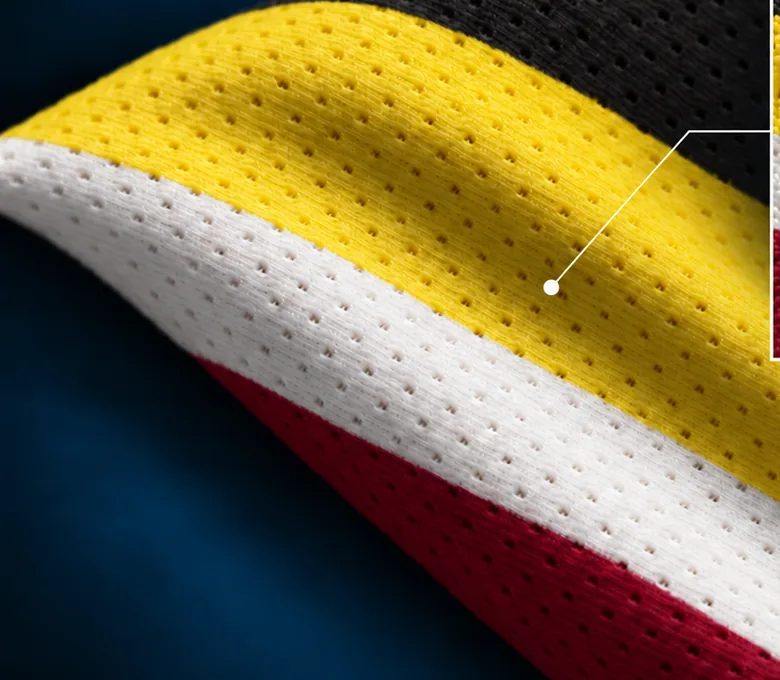 DOTTA-F Pinhole dot mesh, 160 GSM
₹599 per jersey with names and numbers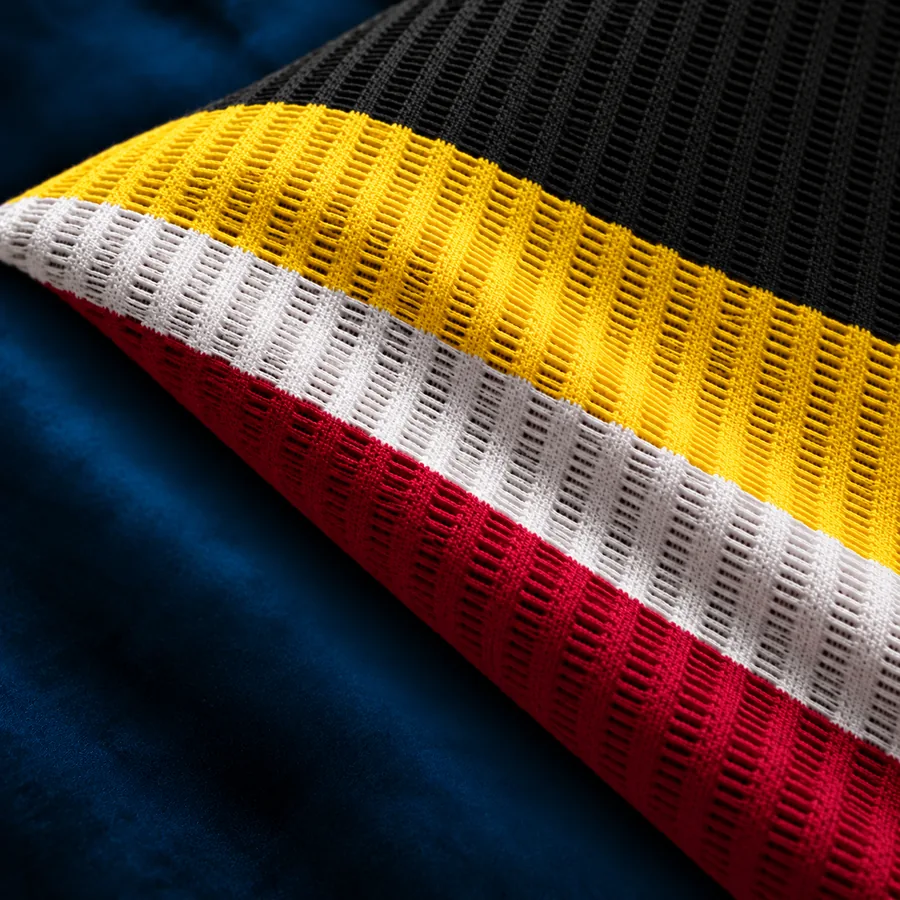 RIBRA-G Rib ladder knit, 140 GSM
₹599 per jersey with names and numbers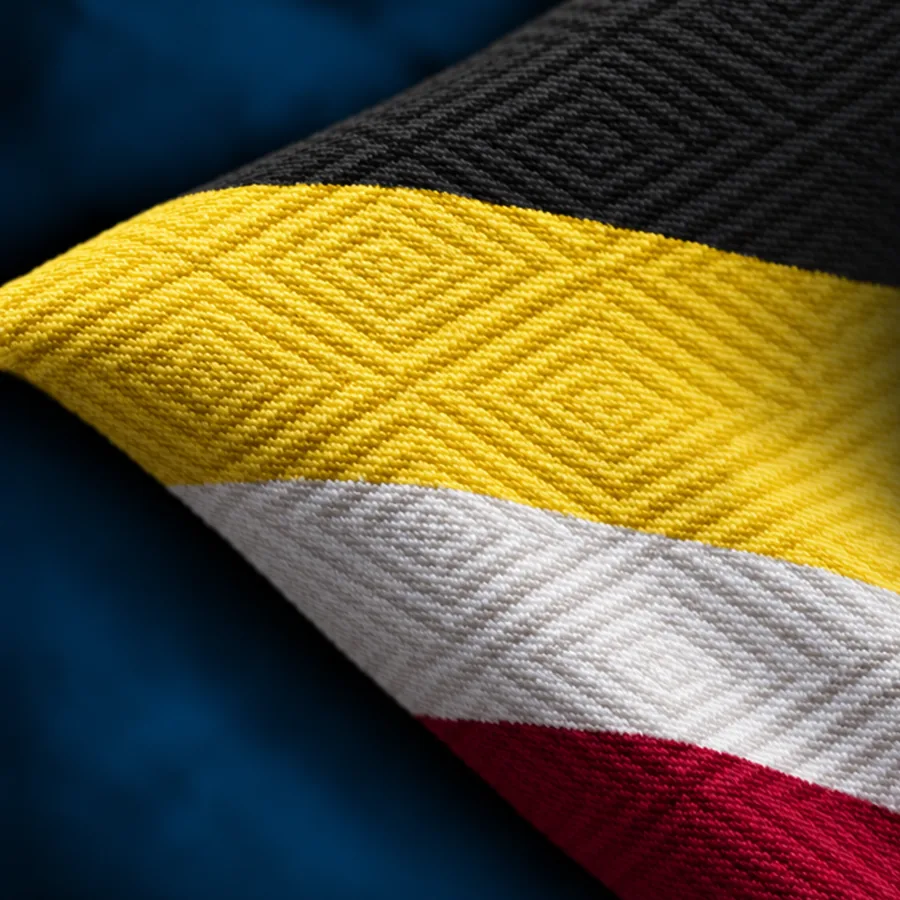 QUARTZ-A Diamond knit, 180 GSM
₹699 per jersey with names and numbers LINEA-S Micro grid knit, 180 GSM
₹399 per jersey with names and numbers
Frequently asked questions
What GSM is best for a volleyball jersey?
For most players 140 to 170 GSM works. DOTTA-F at 160 GSM and ₹599 scores 3 out of 3 for volleyball on our scale. RIBRA-G at 140 GSM and ₹599 is the lightest fabric we make.
What does GSM mean on a volleyball jersey?
GSM is grams per square metre, the weight of one square metre of the cloth. Lower numbers feel lighter and dry sooner, higher numbers feel firmer and warmer. Our range is 140 to 180 GSM.
Is a heavier volleyball jersey better?
Not for movement. A 180 GSM shirt such as QUARTZ-A holds prints flat, but a 160 GSM mesh like DOTTA-F follows an overhead swing more easily and breathes better in a hot hall.
Is 180 GSM too heavy for volleyball?
Not for school or casual play. LINEA-S at 180 GSM and ₹399 scores 2 out of 3 for volleyball. It has no wicking finish, so it will feel warmer on a hot day than DOTTA-F.
Does GSM affect volleyball jersey price?
Barely. RIBRA-G at 140 GSM and DOTTA-F at 160 GSM are both ₹599, while 180 GSM fabrics range from ₹399 to ₹699. Price follows the knit and finishes more than the weight.
Get Your Free Quote
Tell us about your team kit. We send a free design mockup on WhatsApp within 24 hours.
Or WhatsApp us directly: +91 95003 97105
Watch Our Custom Jerseys
See real Jaypee Sports team kits in action. Tap to play.